

-
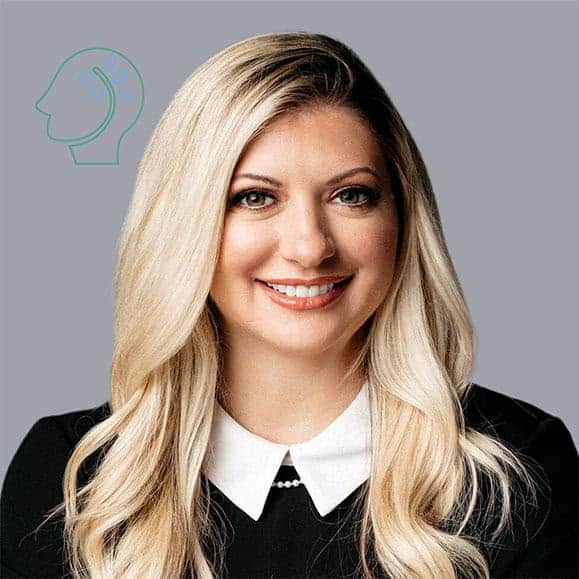 Neuropsychotherapy and Trauma InterventionsOriginally trained as a neuroscientist, Dr. Jennifer Sweeton is a Stanford-educated clinical and forensic psychologist specializing in trauma treatment and the neuroscience of mental health.
 -
 PTSD Relief TherapyInternationally-renowned PTSD researcher and clinician, founder of the Boston Trauma Centre and professor of Psychiatry at Boston University Medical School.
 -
 CBT for DepressionDr. Nina Josefowitz has over thirty years’ experience as a CBT therapist and teacher and is the author of CBT Made Simple.
 -
 Embodied DBTEmbodied DBT Specialist Dr Eboni Webb integrates DBT and Sensorimotor Psychotherapy strategies to address traumatised clients
 -
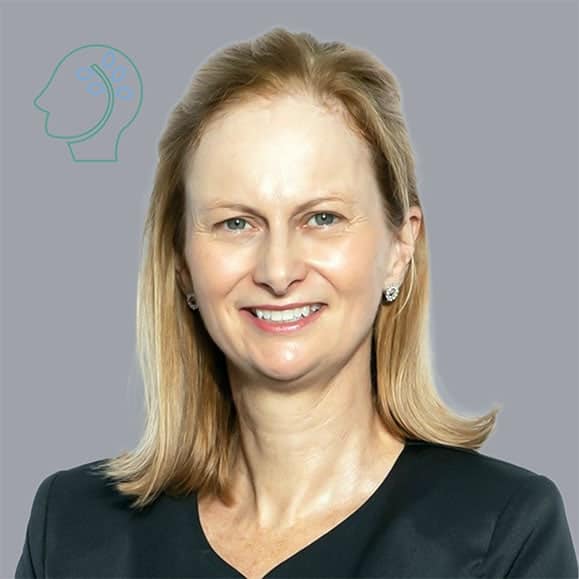 Emotional Freedom TechniquesDr Peta Stapleton is a clinical psychologist and leading researcher renowned for her evidence-based work on Emotional Freedom Techniques (EFT).
 -
 Complex Borderline Personality DisorderDr Daniel Fox is a renowned psychologist who specialises in treatment of personality disorders
 -
 Depression and Bipolar DisorderDr Chris Aiken is a renowned psychiatrist, professor and author who specialises in the treatment of Mood Disorders
 -
 Psychopathy TherapyForensic psychologist Dr Tarra Bates-Duford provides a comprehensive study of psychopathy
 -
CBT TrainingDr. Nina Josefowitz has over thirty years’ experience as a CBT therapist and teacher and is the author of CBT Made Simple.
-
 DBT TrainingDBT Specialist Dr Eboni Webb offers DBT Tools and strategies to address complex clients
 -
 Narcissist TherapyDaniel J. Fox, Ph.D., is a licensed psychologist in Texas, international speaker, and multiple-award winning author. He has been specializing in the treatment and assessment of individuals with personality disorders for over 20 years.
 -
 EMDR TrainingClinical psychologist, international speaker & best-selling author introduces EMDR therapy skills for working with PTSD and trauma.
 -
 Sibling Issues in TherapyProfessor Avidan Milevsky incorporates the latest research and clinical work in family dynamics to examine multiple angles of integrating sibling issues in therapy
 -
 NLP TrainingInternationally acclaimed mind coach, hypnotherapist and bestselling author whose work centres on the principles of neuro linguistic programming (NLP)
 -
 EMDR Training 2Clinical psychologist, international speaker & best-selling author introduces EMDR therapy skills for working with PTSD and trauma.
 -
 Anxiety and Worry TherapyDr Jennifer Abel provides proven therapeutic techniques to help your clients work through the spiral of anxiety and successfully face their fears
 -
 Divided Brain ClinicPsychiatrist Iain McGilchrist describes the real differences between the left and right halves of the human brain. It's not simply "emotion on the right, reason on the left," but something far more complex and interesting.
 -
 Sensorimotor PsychotherapyInternationally-renowned psychotherapist, 40 years’ experience integrating the mind and body, offers relief and a new way of living in our body.
 -
 Hypnosis For Pain Relief TrainingWorld-renowned clinical psychologist and professor with over 30 years' experience using hypnosis for pain control offers a step-by-step guide to using hypnosis to enhance your clinical practice.
 -
 Advanced Trauma Therapy TrainingWorld-renowned trauma clinical psychologist and clinician with over 30 years’ experience helping survivors to accept and love their wounded selves.
 -
 Childhood Sexual AbuseForensic Psychologist Dr Tarra Bates-Duford offers expert therapy approaches for treating survivors of childhood sexual abuse (CSA)
 -
 Anxiety Relief TreatmentClinical psychologist, researcher and expert in behavioural treatment for phobias, provides dynamic treatment and relief from anxiety.
 -
 ACT Therapy TrainingLearn the advantages and benefits of implementing Acceptance Commitment Therapy (ACT) into your clinical practice with Dr John Boorman, UK clinical psychologist and ACT Therapy Specialist.
 -
 Divorcing: Parents & KidsInternationally-acclaimed clinical psychologist, professor at Harvard University, McLean Hospital and clinician with over 30 years’ experience working with high-conflict couples.
 -
 Brain SkoolBrain Skool is a collection of sessions from internationally-renowned specialists investigating the function and processing of their favourite brain regions.
 -
 Depression Relief TherapyDoctor of counselling psychology offers understanding and relief from depression with a variety of skills and a wealth of treatment experience.
 -
Conflict in RelationshipsInternationally-acclaimed clinical psychologist, professor at Harvard University, McLean Hospital and clinician with over 30 years’ experience working with high-conflict couples.
-
 Emotional RegulationClinical psychologist with over 20 years’ experience helping people manage out of control emotions, irrationality, feelings of hopelessness and distress.
The Evolution of Human Language – A Double Edged Sword
SESSION 5 OF 15
Duration 11mins 04secs
TAKE THE QUIZ:
In this session, Dr John Boorman explores how language is at the heart of everything thing we do and has a central role in how we operate in the world. We experience the world directly (as it is) and indirectly (relationally). Dr Boorman explains how human language and thinking has evolved over time and can be seen on a continuum. He builds upon some of the ideas shared in previous sessions and presents a summary of the latest developments in this area. Dr Boorman provides examples of how understanding language can help, but can also hinder who we are and illustrates how it can control our behaviour.
ALL SESSIONS IN THIS MODULE: ACT Therapy Training
01
The Scientific and Clinical Importance of Process
In this session, Dr John Boorman investigates the scientific and clinical importance of process. Where we are at in terms of understanding the human condition and why specific processes work is a problem for everyone connected with helping alleviate human suffering. Whilst there are many empirically supported psychological models aimed to relieve human suffering, including...
02
Context
In this session, Dr John Boorman discusses how ACT sits within a wider organisational structure termed Contextual Behavioural Science (CBS). The importance of understanding context is not new in behavioural sciences. Behaviour is not dependent on anything else, it can only be influenced by the contexts with which it operates, whether these are biological, environmental,...
03
Understanding Human Behaviour (Part 1)
In this session, Dr John Boorman explains how understanding how humans behave and act in different circumstances is a core part in psychological therapy. ACT takes the approach that helping others with this process, whether they are clients, colleagues, friends etc. helps empower them to make significant changes in their lives.
04
Understanding Complex Human Behaviour (Part 2)
In this session, Dr John Boorman explores how understanding how humans behave and act in different circumstances can be complex and confusing, both for the client and clinician. Dr Boorman demonstrates the importance of understanding the clients’ language, and how this is used to help therapist and clients begin to understand their behaviour. He provides...
05
The Evolution of Human Language – A Double Edged Sword « you are here
In this session, Dr John Boorman explores how language is at the heart of everything thing we do and has a central role in how we operate in the world. We experience the world directly (as it is) and indirectly (relationally). Dr Boorman explains how human language and thinking has evolved over time and can...
06
Defusion
In this session, Dr John Boorman investigates defusion. Dr Boorman explains how the problems of the mind are examined in almost every psychological therapy. Humans become entangled with what their mind is telling them as opposed to noticing the process of thinking. Understanding how this process works and learning how thoughts can influence behaviour is...
07
Understanding the Self
In this session, Dr John Boorman investigates understanding the self. The self could be considered as the holy grail of psychology, and many psychological models have sought to explore this central concept. Dr Boorman discusses the self from an ACT and Relational Frame Theory (RFT) perceptive. We discover how we organise our life experiences through...
08
The Problem with Control
In this session, Dr John Boorman investigates the problem with control. Control is often an attractive and desired solution for many people. However, when examined more carefully, particularly if we draw on our own experiences or that of others, how feasible is the control agenda really? Have we been sold an illusion? Dr Boorman illustrates...
09
Complex Narratives – and the Role of Coherence
In this session, Dr John Boorman investigates how complex presentations can be viewed through the lens of the narratives that clients have constructed, and how these make sense to who they are. This is a continuation of the theme presented in the previous session, ‘The Problem with Control’. Dr Boorman provides practical clinical examples on...
010
Creative Hopelessness
In this session, Dr John Boorman investigates Creative Hopelessness. There are times when we continue to act in a certain way even when the outcome may not be helping us move forward. Creative hopelessness is an ACT process which seeks to explore with the client what they are looking to achieve; what strategies have been...
011
Flexibility
In this session, Dr John Boorman investigates flexibility. Flexibility is at the heart of all ACT work. It sits in the centre of the ACT treatment model and has been the subject of multiple studies into its effectiveness as an intervention. Dr John Boorman provides an overview of why experiential avoidance (aka inflexibility) is related...
012
The Role of Meaning
In this session, Dr John Boorman investigates the Role of Meaning. Clients often present in therapy with questions such as ‘who am, I and what do I stand for?’ Developing a sense of purpose and meaning can be central to therapy. Dr Boorman draws upon concepts presented in earlier sessions to illustrate how difficult it...
013
Acceptance and Contacting the Present
In this session, Dr John Boorman investigates acceptance and contacting the present. Acceptance and contacting the present moment can both be difficult concepts to illustrate to others. The former is often associated with resignation, surrender or giving up. The latter, in other modalities known as mindfulness, involves staying in the here and now. This can...
014
Values
In this session, Dr John Boorman investigates values. Helping clients engage in change strategies requires different type of motivational approaches. Values work is one of the key components of the ACT model. It has been used in other types of therapy, however it could be argued that values has always been a front and centre...
015
Behaviour Change – Being Committed
In this session, Dr John Boorman investigates behaviour change. Effective behaviour change is often one of the most challenging tasks in therapy. We humans are adept at sticking to what we know. Deviating or becoming more flexible with how we respond is often a common dilemma in therapy. Helping people to engage with patterns of...
Join Our Mailing List
BRILLIANT MENTAL HEALTH
ONLINE THERAPIST RESOURCES
wisemind.com offers therapist resources for mental health professionals. An extensive content library of psychology tools, including video lessons, demonstrations presented by world-class experts, therapy worksheets, workbooks, forms, quizzes and training certificates.
US$ 8.25 /month (billed annually)
